Diet | South Indian Cooking Recipes
Related Posts Plugin for WordPress, Blogger...
Showing posts with label Diet. Show all posts

Thursday, October 11, 2018

Paleo Egg Noodles | Grain free Low carb Noodles | LCHF


Paleo Egg Noodles/Grain free /LCHF
Ingredients :
Onion 1 no sliced
capsicum 1/2 cup
Carrot 1/4 cup
Cabbage 2 cups
Egg 4 no

Turmeric powder 1/4 Tsp
Chilly powder 1Tsp
Black pepper powder as  per taste
Salt to taste
Extra virgin Olive oil 3 tbsp
(add butter or coconut oil instead of Olive oil )


Preparations :
In a bowl break the eggs one by one and add in it
Add 1/4 tea spoon of turmeric powder, One tsp chilly powder  and salt as per taste
Whisk the egg mixture well
Place a pan on the stove add oil (coconut,olive )or butter
When it became hot add the whisked egg and fry well
When the eggs are done transfer to a plate
Now saute the vegetables in the same pan,add apple cider vinegar as optionally i used here.
Saute it well, don't overcook the vegetables, it should remains it crunchiness.
Now add the fried eggs to the vegetables mix well
Our Paleo egg noodles is ready.

Wednesday, December 10, 2014

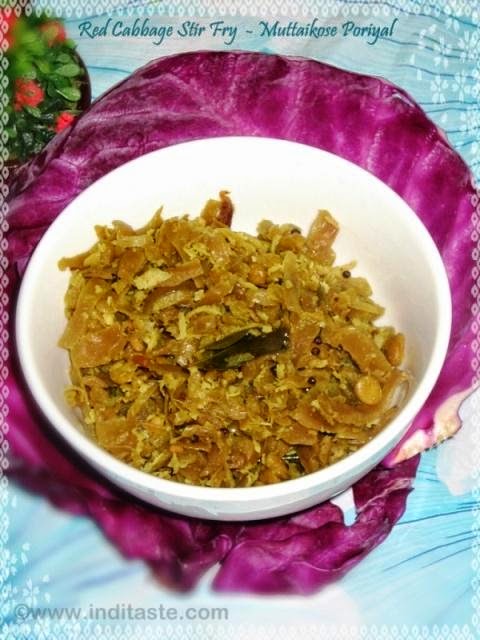
Red Cabbage Stir Fry | Cabbage Poriyal | Muttaikose Poriyal

Red Cabbage Stir Fry or Muttaikose Poriyal is a simple and easy to make Recipe, normally I use green cabbage for our Tamil-Nadu style Cabbage Poriyal but this is the first time I tried red cabbage and it really tastes good. Difference between Red cabbage and Green cabbage is almost same but the health benefits in Red cabbage is slightly better than Green cabbage.

Health Benefits of Red Cabbage
Red Cabbage is rich in Vitamins, Minerals and acts as a antioxidants. It supports to improve the immune system of our body. according to me all the Cabbage varieties are healthy because they're rich in fiber and very low in calorie and high in nutrition.
Credits: foodsubs, sfgate


Red Cabbage Stir Fry - Cabbage Poriyal - Muttaikose Poriyal


Red Cabbage Stir Fry | Muttaikose Poriyal - Ingredients

Preparation Time : 10 mins | Cooking Time : 15 mins |
Total Time :25 min | Yield : 4 Servings |

Recipe Category: Side Dish | Recipe Cuisine: South Indian | Calories : 116 / serve

Ingredients :
Cabbage - 1
Onion - 1
Green Chilies - 2
Grated Coconut - 3 tsp
Bengal gram(Channa dhal,Kadala parupu) - 1/4 cup
Mustard seeds - 1/4 tsp
Splitted urad dhal - 1/4 tsp
Dry Red Chilies - 2
Curry Leaves - 1 strand
Turmeric powder - 1/4 tsp
Oil - 3 tsp
Salt for taste

How to make Red Cabbage Stir Fry or Muttaikose Poriyal

Preparations
  1. Take one medium size Red Cabbage, clean it and cut into small pieces.
  2. In a vessel add Cabbage, Channa dhal and Turmeric powder boil until Channa dhal cooked.
  3. Drain the water and keep it aside.
  4. In a Pan add Oil and heat it, when the oil became hot add Mustard seeds, spitted urad dhal and curry leaves.
  5. After spluttering add the finely chopped Onion, dry red chilies, chopped green chilies, Fry till the Onion became transparent.
  6. Then add the boiled Cabbage and salt and saute for few seconds.
  7. Add the grated Coconut and close the pan for 2 minutes in low flame.
  8. Red Cabbage Stir Fry is ready to Serve.

Cabbage Fry or Muttaikose Poriyal
Cooking Tips :
Instead of Red cabbage You can use any cabbage varieties for this fry.
Serving Tips :
Serve with Rice and Sambar for lunch.


Wednesday, October 29, 2014

Healthy Oats Porridge Recipe | Oats Kanji

Oats Porridge is a simple and easy to make Breakfast recipe, which is healthy and nutritious. Oats is rich in fiber which help in Weight Loss. Oats can also helps in lower the cholesterol levels. there are sweet and salt versions, here I prepared salt version of Oats Porridge. let us see how to make Oats Porridge or Oats Kanji (Tamil) Recipe.


easy oats porridge


Healthy Oats Porridge Recipe - Ingredients


Preparation Time : 5 min's | Cooking Time : 10 min's | Serves : 2
Recipe Category: Breakfast | Recipe Cuisine: South Indian

Oats - 1/2 cup
Buttermilk - 1/4 cup
Water – 2 cup
Salt - to taste

oats porridge

Preparation Method:

  1. Boil the water in a deep bottomed pan.
  2. After water get boiled, add the oats and stir it well.
  3. Add the salt and cook well for five minutes .
  4. add the Buttermilk before serve.
Healthy oats porridge

Serving Tips :
pour the Oats Porridge in a bowl and Serve with raw Onions and Pickles or any Vegetable salad or even with any chutney's .

Cooking Tips:
Instead of Buttermilk and salt you can add milk and sugar(Jaggery) .

Saturday, December 24, 2011

Why don't we trust nature? It can very well be our doctor

"Recently I read this article the subject is very useful for everyone, so I am posting here"

Tulsi for cold, dhurva for longevity, bilwa for cleansing, vallarai for memory power, curry leaves for indigestion and good hair growth and a host of other herbs are the saviours from tiny ailments in villages.

An apple a day keeps the doctor away. A garlic clove a day chases asthma away. A carrot a day keeps the ophthalmologist away . . . a dentist away and cancer away. Deep breathing exercises 20 minutes a day can keep most diseases away. A few yogasanas a day can keep most diseases away.

These are some of the sayings that we don't trust. Everyone one of us has some health ailment or the other. Some have severe headaches, others develop breathing problems, yet others get serious problems such as heart or lung ailments. But have you ever taken an apple or carrot a day as you must have learnt by heart in your primary school?

We don't trust nature. Most of us do not drink rainwater. Rainwater may be slightly contaminated with dust and other chemicals on the first day and from the roof that may be coated with chemicals, but one can harvest it directly from the skies. Keep a clean tub right in the open on the terrace. This can be done the second day of heavy rain. The first day, the water from the skies can wash away dust and other particles in the atmosphere. Then it can be double-filtered and stored in huge drums. This water can be filtered again for drinking.

One must experience the taste of rainwater. It is heavenly. An Australian study has confirmed that rainwater is very much safe for drinking and other household purposes and does not cause any illness. Most people have installed a rainwater harvesting system but use this water for bathing and washing and rarely for drinking.

Children love the rains. They love snapping those bubbles and having a bath. But today you find a lot of elders shooing them away from having fun in the rain all because they think they will catch a cold. Don't you get a cold even when you don't bath in rain? Your hair shines so well after a bath in rain/rainwater.

Working late or watching movies most of us have lost the habit of waking up early and doing some form of exercise. Schools back in the 1960s had morning prayer and some exercises in the open sunlight for about half-an-hour. Although yogasanas and breathing techniques have gained importance (more in the West), we turn to them for style, or when we have some ailment that refuses to budge with our popping pills.

Ancient texts kept at the Saraswathi Mahal library in Thanjavur, Tamil Nadu, about breathing exercises have this to say. Practising a certain type of deep breathing while studying (alternate right and left nostril breathing) can improve memory power and help you retain whatever you are studying. This text says that breathing should be practised on an empty stomach pretty early in the morning (studying early in the morning some time before sunrise). The text says that this way, you cannot forget whatever you have read. This is because the oxygen that enters your body clears congestion in the brain and enables it to retain whatever you have read with concentration in memory.

Deep breathing exercises practised just for about 10-20 minutes a day can improve eyesight, cure constipation, ward off most diseases. A person practising Asanas rarely gets any degenerative disease. It is advisable to learn these breathing exercises and yogasanas from a practitioner as there are rules about doing the same and they can cause harm if done in haste or on a heavy stomach or when ill.

While you can get rid of most skin problems by taking a sun-bath, we have the habit of seeing the sun when we travel to our workplace and on weekends after a late breakfast. Suryanamaskars have become a religious sign or practised to help us rid ourselves of paunches.

We use polyester garments and rarely expose ourselves to cool air or sunlight. The fresh air can give you a cold or fever. We get the idea that standing in cool air can give us a cold whereas overeating and eating junk foods or drinking colas cannot.

A lot many people are scared of tasting seasonal fruits. Mangoes are a ‘no' ‘no' for fear of our sugar levels rising or our getting diabetes. Whoever said fruits will usher in diabetes, and not a sedentary lifestyle and wrong eating habits? Bananas no, potatoes no, carrots no. There are a lot of self-analysed ‘Nos.'

Tulsi for cold, dhurva for longevity, bilwa for cleansing, vallarai for memory power, curry leaves for indigestion and good hair growth and a host of other herbs are the saviours from minor ailments in villages. People living in cities cannot even identify common herbs, much less use them to benefit. Looks like we don't trust nature.


Friday, September 2, 2011

Find out if your weight is healthy

Body Mass Index (BMI)
 
* The Body Mass Index (BMI) can be used to find out if you are overweight or obese.
Height and weight are used to find your BMI on this chart.

* In the graph below, mark the square where your height and weight cross.
The color of the square will tell you if your weight is healthy, overweight, or obese.

Try These Steps To Lose Weight

# Diabetes, overweight, high blood pressure, rich meals, desserts, high waist measure,
a lack of physical activity, and poor nutrition will bring bad news from your physician.

# Drink water instead of soda or other drinks high in calories and sugar.

# Take action now to prevent disease, reduce the fat, STOP SMOKING, PLEASE!

# Keep lots of fruits and veggies on your table and when you shop, read the food label.

# Turn off the TV and go for a walk.

# Go with a friend and enjoy a good talk.

# Plan for the future and increase your chances of attending your kids’ graduations and dances.

Change your lifestyle now—Play it smart!
start living healthy, and guard your heart!


Wednesday, August 3, 2011

Dry Fruits for Health Benefits


Everybody in this world must take care of their health and fitness. To attain good health we need to follow good nutrition and regular exercise. In order to keep healthy life we must have foods just  like as nuts, fruits, vegetables, cereals etc. which are naturally available. Dry fruits are considered rich source of nutrients and regarded as delicacies. Some of the food items which comes under the dry fruits category are : Cashew nuts, Raisins, Walnuts, Almonds (Badam), Pistachio(Pista), Date (Kajur), Peanuts (Groundnut), Macadamia nuts, Hazelnut etc.

Dry fruits are excellent source of minerals and contain substantial quantities of essential nutrients. They are easy to digest and help keeping us healthy. Similar to fresh fruits dry fruits have strong medicinal properties.

Many people suffer from a bit of constipation and this is directly related to their diet. People tend to miss out on consuming fiber rich foods that provide the essential roughage, which, in turn, prevents constipation. Opt for eating dried fruits as they are rich in fiber, help in digestion and in general lead to a healthy colon.

Dry Fruits also have many positive health benefits to pregnant women as well as to the child. Dry Fruits will take good care of the baby’s dietary requirements as well as its growth and development. Regular intake of the dry fruits results in both mental and physical development of human body. Make a habit of having few dry fruits everyday.

Wednesday, July 27, 2011

Green Tea Benefits and Preparation

What is Green Tea ?
Green tea originates from China , Green tea has been used as a medicine in China for at least 4,000 years.
Botanical evidence indicates that India and China were among the first countries to cultivate tea. Today, tea is the most widely consumed beverage in the world, second only to water. Green tea comes from a tea plant native to Asia called Camellia Sinensis. Black tea also comes from this same plant. What makes green tea different, and green, is not the plant used to make the tea, but how the plant is processed. Green teas are the least processed of commercial teas and the method used preserves more of the nutrients and health benefits.
Let's see some benefits of green tea below

Benefits of Green Tea

The most recent reports indicate that this Green tea is believed to be very useful in increasing a person’s metabolism. The overall effect that green tea diet drinks have on a person depends on a variety of factors, however. Further research needs to be completed regarding this aspect of using green tea.
For now, you can be assured that green tea will provide your body with many other benefits. All of this occurs primarily because of a key ingredient present in it. 


    • Green Tea Act as antioxidants thus it lowers the Risk of Cancer.
    • Green Tea Lowers Cholesterol and thus, the Risk of Stroke and Heart Diseases
    • Green Tea Lowers Blood Pressure.
    • Green Tea Prevents Tooth Decay.
    • Green tea is said to help in lowering calories and fighting fat.
    • Reduction in bad cholesterol and Helps in weight loss.
    • Increase in metabolic rate / fat oxidization.

    How to Make Green Tea?
                                                                            
    Add one cup of  water in a teapot or kettle to a boil then let it sit for about few minutes to achieve the perfect temperature around 60-80 ° C (180 °F)
    Now add the tea leaves and let it infuse for 2 - 3 minutes but not any longer, or else your tea will become slightly bitter
    You can add small amount of  sugar, lemon or honey to your taste

    Don't drink Green tea after 6 pm. Otherwise, you cannot have a good sleep

    South Indian Food Guide


    Introduction
    South India which includes Tamil Nadu, Kerala, Andhra Pradesh and Karnataka have both coastal and non-coastal regions. The common aspect of all the states is that they are predominantly rice eaters.  Since fish and coconut are found in abundance they form an important part in their diets. South Indian food is largely non greasy, roasted & steamed. Rice forms the basis of every meal & is usually served with sambaar, rasam, dry & curried vegetables & curd preparations. Dosa, idli & vada have now become popular throughout the country.

    ShareBar